
So, What to Expect During Roof Replacement
A roof replacement is a major piece of work for any property owner, and it is normal to want a clear understanding of what will happen before the project begins. Knowing what to expect during a roof replacement helps you prepare your home, plan your time, and feel confident that the work is being carried out correctly. From the initial inspection through to the final checks, a professional roof replacement follows a structured process designed to protect your property and deliver long term results.
Roof replacements are usually required when a roof has reached the end of its lifespan, suffered widespread damage, or can no longer be economically repaired. While the process can seem disruptive, experienced roofers aim to keep disruption to a minimum while ensuring the work is completed safely and to the correct standards.
The Initial Roof Inspection
Every roof replacement starts with a detailed inspection. This allows roofers to assess the overall condition of the existing roof, including tiles, felt, battens, flashing, and the underlying structure. The inspection confirms whether a full replacement is necessary or if repairs would still be effective.
During this stage, roofers also look for hidden issues such as rotting timbers, damaged insulation, or poor ventilation. Identifying these problems early ensures they can be addressed as part of the replacement rather than becoming future concerns. In some cases, inspections are supported by drone surveys, especially for large or hard to access roofs.
Once the inspection is complete, you should receive a clear explanation of the findings along with a detailed quotation outlining the scope of work.
Planning and Preparation
Before work begins, the roofing company will plan the replacement carefully. This includes ordering materials, arranging access equipment, and scheduling the work around weather conditions. Roof replacements are usually planned for periods of settled weather, although experienced teams can manage short periods of rain using protective coverings.
You may be advised to move vehicles away from the property and clear the loft space of stored items. Although roofers take care to minimise dust and debris, vibrations during work can sometimes affect loft contents. Letting neighbours know about the work is also considerate, particularly in built up areas.
Scaffolding and Safety Measures
For most roof replacements, scaffolding is required to provide safe access. Scaffolding protects workers and allows materials to be moved safely without risk to people below. Safety is a critical part of any roof replacement, as roofing work involves working at height.
Professional roofers follow guidance from the Health and Safety Executive on working at height, ensuring the correct equipment and safety procedures are in place throughout the project. This reduces risk and ensures the work progresses efficiently.
Removing the Existing Roof Covering
Once access and safety measures are in place, the existing roof covering is removed. This usually involves stripping away old tiles or slates, followed by the removal of worn felt and battens. Materials are carefully removed and disposed of responsibly.
This stage allows roofers to inspect the roof structure fully. Any damaged or weakened timbers are repaired or replaced to ensure the new roof has a solid base. Addressing structural issues at this point is essential for the longevity of the replacement.
Installing New Roof Components
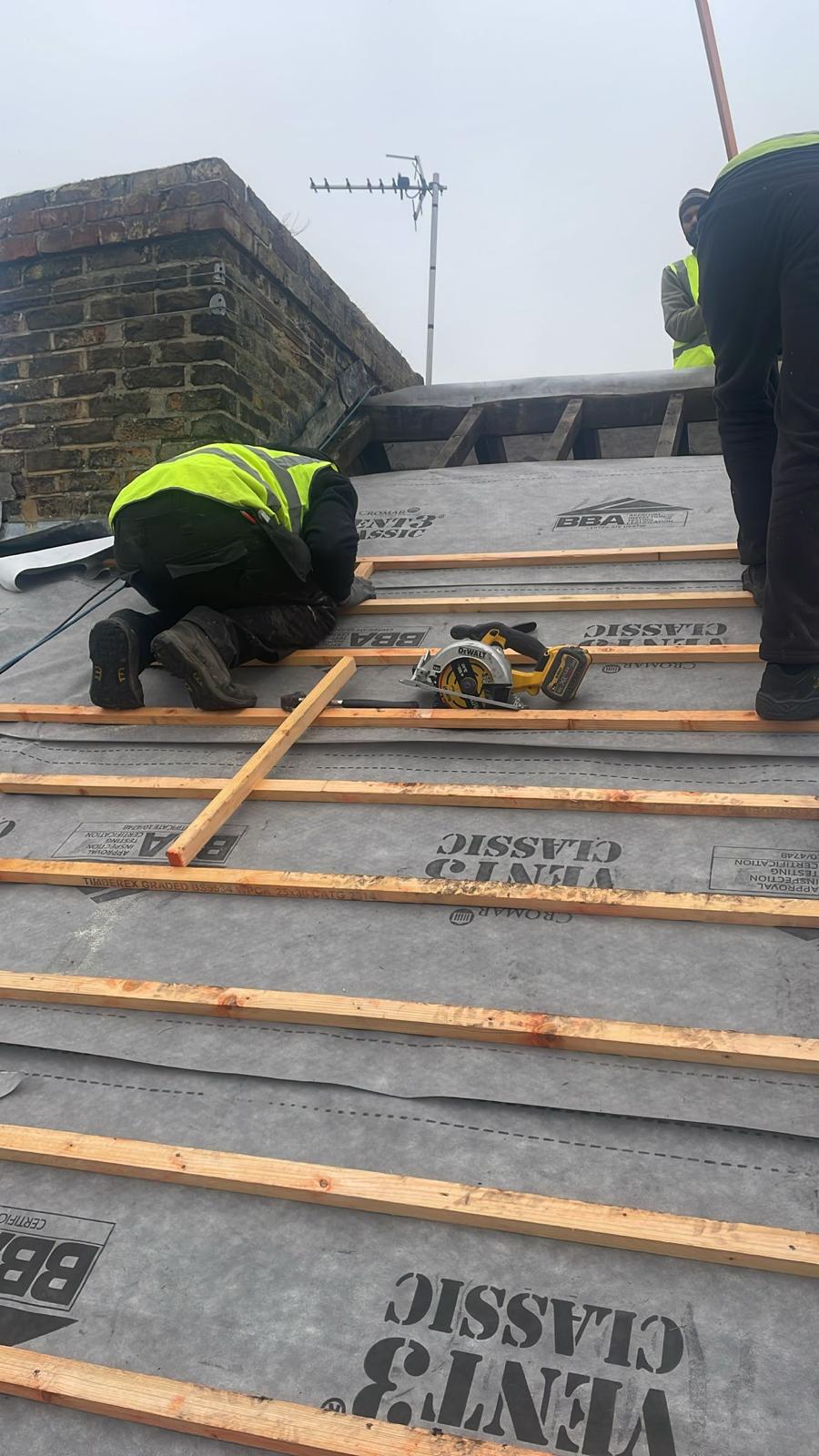
After the roof has been stripped back and the structure checked, installation of the new roof begins. The first layer fitted is typically modern breathable felt or underlay, which provides an additional barrier against water while allowing moisture to escape from inside the roof space.
New battens are then installed to support the tiles or slates. These are fitted to precise spacing to ensure the roof covering sits correctly and performs as intended. At this stage, flashing around chimneys, valleys, and roof joints is also replaced or upgraded to ensure a watertight seal.
The new roof covering is then installed. Whether tiles, slates, or another system, each piece is fixed securely and aligned to allow rainwater to drain efficiently. Proper installation is key to preventing future leaks and weather related damage.
Roof Replacement and Building Regulations
Most roof replacements must comply with current GOV.UK Building Regulations. These regulations cover areas such as insulation levels, ventilation, and structural safety. If more than a certain portion of the roof is being replaced, compliance becomes particularly important.
Professional roofers ensure the replacement meets these standards and advise if inspection or sign off is required. In some cases, approval or guidance may also be needed from the Planning Portal, especially for listed buildings or properties in conservation areas.
Managing Weather During the Replacement
Weather is always a consideration during roof replacement. Experienced roofers plan work in stages so the roof is never left exposed for long periods. Temporary coverings are used if unexpected rain occurs, protecting the property until work resumes.
Although some noise and activity are unavoidable, professional teams work efficiently to complete the replacement as quickly as possible without compromising quality.
Internal Impact on Your Home
During a roof replacement, most of the work takes place externally. However, you may notice some noise, vibration, and occasional dust, particularly if work is being carried out above living spaces.
In most cases, you can remain in the property while the roof is being replaced. Roofers will advise if any temporary adjustments are needed, such as keeping windows closed or avoiding certain areas during specific stages of the work.
Final Checks and Clean Up
Once the new roof is installed, final checks are carried out to ensure everything has been completed correctly. This includes inspecting tiles, flashing, ridges, and drainage to confirm the roof is fully weatherproof.
The site is then cleared of debris, and scaffolding is removed once it is safe to do so. A professional roofing company leaves the property clean and tidy, with all materials disposed of responsibly.
Aftercare and Ongoing Maintenance
After a roof replacement, you should receive guidance on maintaining your new roof. This may include recommendations for regular inspections, keeping gutters clear, and checking for storm damage. While a new roof requires less attention than an older one, ongoing maintenance helps maximise its lifespan.
If any minor issues arise after completion, a reputable roofing company will address them promptly as part of their aftercare service.
Why Choosing the Right Roofing Company Matters
A roof replacement is a significant investment, so choosing experienced professionals is essential. Skilled roofers ensure each stage of the process is completed correctly, from inspection and preparation through to installation and final checks.
At Trust A Trade Roofing, we carry out roof replacements with a clear focus on quality, safety, and long term performance. We also work closely with Hythe and Folkestone Roofers to deliver reliable roofing services across the region.
Industry guidance from Checkatrade’s roofing hub highlights the importance of professional workmanship and clear communication throughout roofing projects.
Conclusion
Understanding what to expect during a roof replacement helps reduce uncertainty and ensures you are prepared for each stage of the process. From the initial inspection and preparation through to installation and final checks, a professional replacement follows a clear and organised approach.
If your roof has reached the end of its lifespan or you are considering a replacement, Trust A Trade Roofing is here to help. For expert advice or to arrange an inspection, contact us here to discuss your roofing needs with confidence.