
What are Some Common Signs of Roof Damage After a Storm
Storms can cause serious and sometimes hidden problems for roofs across Kent. Strong winds, heavy rain, and flying debris all place pressure on roofing materials, often leading to damage that is not immediately obvious from ground level. Understanding the common signs of roof damage after a storm helps homeowners act quickly, reduce the risk of leaks, and avoid costly long term repairs.
Even if your roof looks intact from the outside, storms can loosen tiles, weaken flashing, and allow water to enter small gaps. These issues often worsen over time, which is why post storm checks are so important.
Why Storms Cause Roof Damage
Storm conditions combine several damaging factors at once. High winds can lift tiles or ridge caps, rain can force its way under coverings, and falling branches or debris can crack tiles or puncture flat roofs. In some cases, the damage happens gradually as materials shift slightly rather than breaking outright.
Roofs are designed to cope with normal weather, but repeated storms or one severe event can push materials beyond their limits. Older roofs or those that have not been maintained regularly are particularly vulnerable.
Missing or Slipped Roof Tiles
One of the most common signs of roof damage after a storm is missing or slipped tiles. Strong gusts can lift tiles out of position, especially along ridges, edges, and valleys. Even a single displaced tile can allow rainwater to reach the felt and timber beneath.
You may notice tiles on the ground after a storm or gaps visible on the roofline. In some cases, tiles remain partially in place but no longer sit flush, which still creates a route for water to enter. Prompt roof repairs prevent further movement and stop small issues from becoming widespread leaks.
Water Leaks and Damp Patches
Internal signs are often the clearest indication of storm damage. Water stains on ceilings, damp patches on walls, or peeling paint near the roofline usually appear days after a storm once moisture has travelled through the structure.
In loft spaces, you may notice wet insulation, dark patches on timbers, or a musty smell. These signs should never be ignored, as ongoing moisture can lead to mould growth and timber decay.
Damaged Flashing and Leadwork
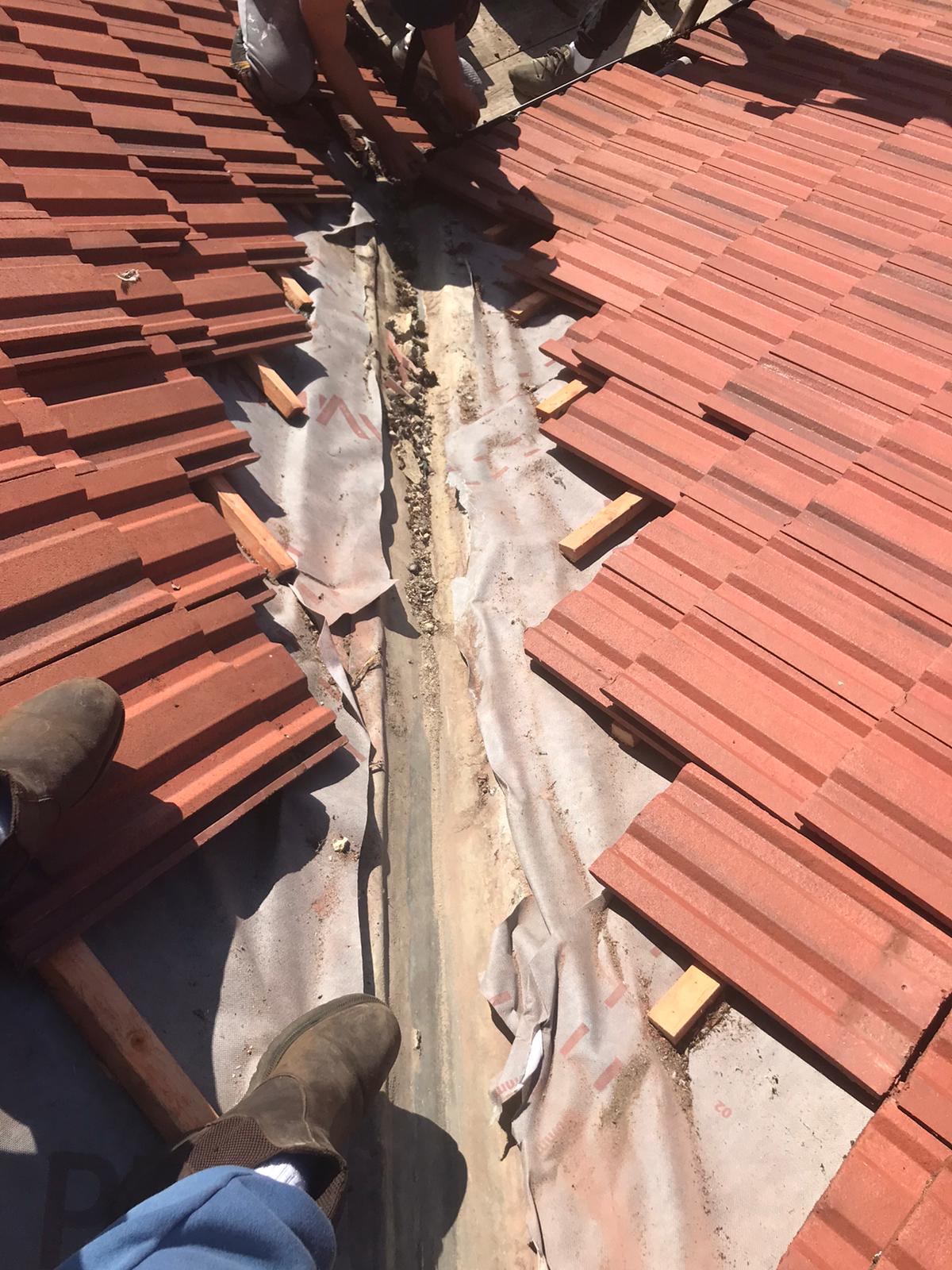
Flashing protects the joints around chimneys, roof valleys, skylights, and dormers. Storms can loosen or crack flashing, particularly where mortar has already weakened. Once flashing lifts, water can run behind tiles and into the roof structure.
Damaged flashing often causes leaks that are difficult to trace because water enters at one point and travels before becoming visible inside. Professional inspection is usually required to locate and repair these faults correctly.
Ridge and Hip Tile Movement
Ridge and hip tiles sit along the highest points of the roof and are directly exposed to wind. Storms can loosen the mortar that holds them in place, causing cracks or movement. In severe cases, ridge tiles can become unstable and pose a safety risk.
Loose ridges not only allow water ingress but also increase the chance of tiles becoming dislodged during future storms. Repairing ridge mortar promptly helps restore stability and weather resistance.
Gutter and Downpipe Damage
Storms often carry leaves, branches, and debris that block gutters and downpipes. Overflowing gutters allow water to run down walls and into the roofline, which can lead to damp and staining.
High winds can also pull gutter brackets loose or cause sections to sag or separate. After a storm, check for overflowing water during rainfall or visible damage to guttering. Keeping drainage systems clear is an important part of protecting your roof after severe weather.
Flat Roof Damage
Flat roofs are especially vulnerable during storms. Heavy rain can lead to standing water, while wind can lift edges or damage joints. Storm debris can puncture the surface, creating small holes that allow water to seep through.
Signs of flat roof damage include pooling water that does not drain, cracks or blisters on the surface, and leaks appearing inside shortly after rainfall. Flat roofs should always be inspected after storms to ensure the waterproof layer remains intact.
Debris on the Roof or Around the Property
Finding tiles, mortar, or roofing materials on the ground after a storm is a clear warning sign. Even if the roof still looks mostly intact, fallen debris usually indicates movement or breakage higher up.
Branches or other objects lodged on the roof should not be removed without proper safety precautions. Roofing work involves significant risk, and guidance from the Health and Safety Executive on working at height highlights why roof inspections should be carried out by trained professionals using the correct equipment.
Roof Felt and Underlay Damage
Storms can expose weaknesses in roof felt, especially if tiles have shifted. Torn or sagging felt allows wind driven rain to reach the roof structure. Because felt sits beneath the tiles, damage is often hidden until leaks appear inside.
A professional inspection can confirm whether the underlay has been compromised and whether repairs or replacement are required. In some cases, repeated storm damage may indicate that the felt is nearing the end of its lifespan.
Structural Issues and Roof Sagging
In severe storms, prolonged exposure to water can affect the roof structure itself. Saturated timbers may swell or weaken, leading to slight sagging or uneven rooflines. While this is less common, it is a serious issue that requires immediate attention.
Structural problems should always be assessed by professionals, as incorrect repairs can make the situation worse.
How to Check Your Roof Safely After a Storm
After a storm, it is important to check your roof without putting yourself at risk. Visual checks from ground level can reveal obvious problems such as missing tiles or debris. Checking the loft for damp or daylight also helps identify hidden damage.
Climbing onto the roof without proper training or equipment is dangerous. The Health and Safety Executive provides clear roofing safety advice explaining the risks involved in roof work and why it should not be treated as a do it yourself task.
For a full assessment, professional inspections or drone surveys provide a safe and effective way to identify damage across the entire roof surface.
When to Arrange Professional Repairs
If you notice any signs of roof damage after a storm, early action is essential. Minor issues such as slipped tiles or cracked flashing can often be repaired quickly. Delaying repairs increases the risk of water damage, insulation problems, and higher costs.
In cases where water is entering the property or tiles are unstable, our 24 hour emergency callouts ensure your roof is made safe as quickly as possible.
Do Storm Repairs Need Approval
Most storm damage repairs do not require planning permission, as they fall under like for like maintenance. However, if a large section of the roof needs replacing or structural changes are involved, guidance from the Planning Portal and GOV.UK Building Regulations may apply.
Professional roofers ensure work is carried out correctly and advise when compliance or inspection is required.
Why Professional Roofing Matters After a Storm
Storm damage can be deceptive, with problems developing gradually after the weather has passed. Professional roofers understand where damage is most likely to occur and how to repair it properly.
At Trust A Trade Roofing, we also work closely with Hythe and Folkestone Roofers, combining local experience to provide reliable post storm roofing support across Kent. Our approach focuses on safety, durability, and preventing repeat issues.
Our work is supported by guidance from Checkatrade’s roofing hub, helping homeowners understand what to expect from professional roofing services.
Conclusion
Storms can cause a wide range of roofing problems, from obvious damage like missing tiles to hidden issues such as torn felt or lifted flashing. Recognising the signs of roof damage after a storm allows homeowners to act quickly and protect their property from further harm. Regular inspections, safe assessments, and prompt repairs all play a role in keeping roofs secure.
If you are concerned about storm damage or would like your roof professionally checked, Trust A Trade Roofing is here to help. For expert advice or to arrange an inspection, contact us here.